Showing posts with label AD and D. Show all posts

Wednesday, February 5, 2014

That 1d6 Dungeon You Always Wanted


Or rather, the one one I always wanted. I thought that for one of the sub-levels of Scadwrath Castle, I'd do something quite silly and off-the-wall. After all, the setting Moog is a very silly, gonzo place and this just struck me as something that should be there, someplace. The idea is that, maybe I want to hide something in this dungeon, or maybe the baddies have kidnapped a princess and spirited her away in one of the six sectors (there is no shortage of princesses available for kidnap/rescue cosplay in the city of Vermistadt, which lies above this massive dungeon, if that's the sort of thing your adventurers are into). So, roll a d6 and that's where the goodies/Rod of Seven Parts/Princess Buttercup (you get the idea) is/are located.

Now, I originally got this idea from Zach S's awesome city street idea in his Vornheim book. Seriously, you must have that book. Go buy it here if you don't already have it. And yes, yes I grock the whole architectural impossibility of it all, but hey, there are massive, cyclopean stones here, eldritch magic, etc.  There are 5 levels here keyed up for you to do as you will with it. There's even an exit to wherever over there near areas 45 & 87. Hell, I don't even know where that goes. I color coded them so it's easier to see where one level ends and a new one begins.

Like the other maps for Scadwrath Castle, there are plenty of pools, statues, etc. so you can have fun bedeviling the poor saps who wander into the place. The checkerboard floors (constructed from marble one supposes) are of course harmless, but placing a trap on just one of them will scar your players for life. You can chuckle with maniacal glee from that point forward as they pointlessly take all sorts of time to circumnavigate a pretty, but otherwise normal floor whenever they encounter them in the future.

As for the backstory and the key, yes, I will probably provide a fully keyed version at some point and may do the entire thing (12-ish levels not counting the upper works of the castle itself) just so my kids can put it to good use some day. The maps are part of a massive, active dungeon complex that lies beneath the gonzo city of Vermistadt. It's basically a 0E or 1E WHFRP city that sprung up over a series of ruined dwarves mines and ruins. The castle, belongs to a mysterious and powerful duke who maintains his own little duchy within the city walls. Part of the complex houses his Shadow Born undead legion which he keeps in top fighting shape by throwing a never ending stream of eager and obviously, slightly deranged adventurers at them. The adventurers who fall in the initial levels just unwittingly signed up for long term service in his Grace's legion, but hey, there's an awesome dental plan. Consider it a Roach Motel for greedy adventurers, thinning the herd so that only the truly epic delvers can pass on into the higher levels of experience.

So, yeah, use it as you please, but of course I retain copyright on it (as well the other stuff on this blog) for print purposes, etc.

Link to pdf download is HERE. The original was drawn is the weird little square sketchbook I have lying around. It's roughly 8" x 8" so, you may need to adjust your printing accordingly.

Tuesday, February 4, 2014

To All the House Rules I've Loved Before

I'm sure many of you DMs out there are tinkerers like myself. I do the same thing in my professional life to be honest. I can rarely leave good enough alone and I seem to always be tinkering with classes that I've taught for 10+ years just to see if there's a better way to do things. I suppose it should come as no surprise that I've tinkered around with most ideas for house rules at one point or the other. Shields Shall be Broken, Critical Hits & Fumbles, the d30 rule, you name it, I've pretty much tried it.

Shields Shall be Broken I found this one to be very flavorful, but it's just a bit too cumbersome really. In essence, this is a get-out-of-jail free card for your fighter types. Now, I'm all for making fighter types more attractive, but our group grew tired of it very quickly. I do think it's one of the best bennies you can throw to low level fighters, but what about orcs, hobgobs, and other mooks? Shouldn't they exploit the rule also? In the end, it started to become a joke in our groups and seems no different than situational giving your melee combatants additional hit points.

The d30 Rule I still like the hilarity of this one and could probably be talked into using it again sometime. The one thing that bugs me the most though is that occasionally, it makes a mockery of your Big Dramatic Chapter Ending Battle. Surely this could be fixed by giving your Big Bad Evil Guy d30 Immunity or the like, but to me, that seems a little inelegant. I mean, your players are going to want to save the roll 'til the absolutely most critical moment of the evening. No doubt they're going to feel a bit cheated when every Boss Monster happens to be wearing his Cloak of d30 Immunity. It's a fun rule, I'm sure others have found a work-around for the issues our groups had with it, but it just made for too many anti-climactic moments in our games so we stopped using it some time ago.

Critical Hits & Fumbles OK, so I get that EGG completely hated the notion of these, but to me, they're still fun and make combat more varied and exciting. They've been around since, oh, I don't know, the early 80s I guess, and I always enjoyed using them if and when you can find the sweet spot for using them in your game (that is to say, the implementation that makes combat more exciting without overwhelming the PCs). If my Google Fu is correct, it was Dragon Magazine Issue 39 that brought us that lovely Good Hits and Bad Misses article and that was the first time I used them (much to the consternation of my dubious players at the time). I modified it though so that we only used the chart on a natural 20 or a 1 just for simplicity (and still do). Initially, after much bloodshed and hilarity, it became apparent that allowing every scrubby kobold a chance at beheading the PCs is simply too much (or maybe not depending on what you're trying to achieve with your game).

I do agree that the 3.X solution is quite elegant (certainly one of the things that 3.X got right), but it adds more dice rolling than I really want in my Old School games. Over the years, I've tried the absolutely murderous Rolemaster Charts, took a shot at adapting the hysterically gory WFRP 1E criticals, the Paizo critical & fumble cards (which I quite like for d20 sorts of games), and now have arrived full circle back to the good ol' charts from Good Hits and Bad Misses. I think the sweet spot for old school play is simply saying this rule applies to all PCs, Named NPCs and Boss Monsters. I warn my players that most encounters, but certainly not all, will contain a Boss Monster, a leader type who won't always self-identify, but will usually become apparent that he has a tub-load of HPs and seems to be better at fighting than the other scrubs. Needless to say, this make something like a Boss Ghoul with 3 shots at dropping a 20 on you an enemy that even experienced characters will respect.


Death & Dismemberment I've tried a couple different versions of these charts and finally got around to making my own. It makes for a very gritty campaign as PCs and followers will lose limbs and the like as well as having very funny (or serious I guess if your group looks at it that way) death scenes. This does give low level guys a bit better odds at survival unless of course the bad guys are the carnivorous types that immediately begin chompin' on fallen PCs, provided of course that someone in the party survives the encounter to bind their wounds. When characters are bleeding out due to this rule, I allow anyone to apply first aid simply by moving to them (in lieu of attacking or casting a spell).

The one thing that bugged me about the other charts was that a guy would hit the ground and on some rare results, would simply spring back up with renewed energy to continue the fight. On most results though, the character would fall to the ground gravely wounded, their fate uncertain until someone could get to them to check out their condition. I decided that for my campaign, I didn't like the idea of a character jumping and getting right back into the fight, so I devised a series of modifiers for the roll and developed new benefit for those lucky enough to roll an 11 or 12. It works for my Gonzo Old School Setting of Moog, so try it out if you like the idea of the Oscar Scenes for your characters and their followers.


PDF download of Death & Dismemberment for Moog is HERE.

Binding Wounds After Combat I'll confess that I have no idea where I got this one. I know that some folks use a d3, but I like the d4 and I allow any character to do the wound binding (only once per combat in which you have taken damage and immediately afterwards). It's particularly useful at low level when many clerics may have little (if any, depending on which rule set you're use) healing and helps the party keep exploring rather than the old "hey, we're out of healing, guess it's time to head back to the pub for pints lads" paradigm that occurs otherwise. This rule is essential I think when playing in large groups or with kids or newbies. It also takes care of the situation, that I find to be all too familiar if I'm being honest, where no one wants to play the Cleric.

Saving Throw as an Indicator of Class-Related or Race-Related Skills, Knowledge, etc. Another one that I'm not really sure where it came from, but I use it in every old school game I run. In my games, characters are generally "adventurers". The ranger knows the stuff that rangers know. Thieves know the best place to pawn stolen goods and the like. If players want to add a bit of background by utilizing the secondary skills chart from the 1E DMG, that's fine by me.  I usually play with the conceit that Magic Users and Elves know about ancient mysteries in much the way that Gandalf or Elrond would. I will typically use the Paralysis save unless I'm playing S&W White Box which has only 1 save (which I love, love, love). It's not perfect by any means and yes, dwarves and halflings in this sort of situation tend to benefit from their superior saves, but you can limit that by deciding that their breadth of knowledge isn't quite as extensive as other races. I certainly find it adequate at representing a workable set of skills without becoming overburdened  by a full blown d20 set of skills.

Friday, January 31, 2014

Beware of Scadgrads Bearing Gifts


So, it’s been entirely too long since I’ve paid enough attention to this blog. I think I’m lucky enough to be that rare gamer who suffers from too many games. Yes, that’s right folks, I could place blame on my lack of productive blogging on things like work, fatherhood, MMO play, my music, painting, etc. Truth is though, I simply play a lot of games and that’s how I choose to spend my hobby time. Currently, I have a weekly Friday game, a once-a-week online game (MapTools and Ventrillo), and a 2X month game with my kids and their friends. I also have a few other games that I run from time-to-time. So yeah, busy gamer, that’s me.

On the other hand, I have made all sorts of things that I intend to share with the gaming community and plan on doing so over the next few updates. This first piece is a rather large sub-level of my own massive, old school dungeon (Scadwrath Castle). I wanted to have a go at drawing dungeons without grid paper, drawing them in my sketchbook. Honestly, before I started reading Dyson’s blog, I had never even considered doing such a thing. Not sure how successful this one is, but man, it’s big enough that you could explore for hours and hours. It consists of 95 rooms, 5 different levels most of which are finished rooms and passages, but a few caverns. I’ve color-coded the hand lettering so that you can more easily see where the level changes are located. I’ve stocked this myself and will probably upload that at some point.


On the other hand, it would probably be more fun to see what folks out in the OSR can do with it.

Download a PDF of the dungeon HERE. Note that the original is about 8" x 8" so you'll want to click the "fit page" radio button on your print dialogue window. I've left room at the bottom of the PDF so you can write notes if need be.

Tuesday, March 20, 2012

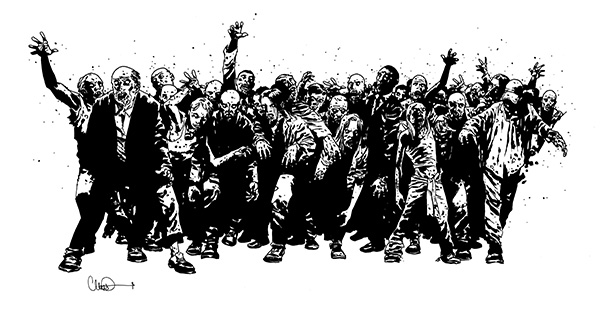
PDF for 20 Zombies Now Available

© Charlie Adlard
 Outstanding artist of The Walking Dead comic book
Sorry for the delay, but I wanted to include an illustration of my own for the first page of the pdf. I think the illo ended up looking like a Charlie Adlard drawing stumbled into a B/X illustration (with apologies to EO and the wonderful Mr Willingham), in a funny sort of way. I had hoped to complete it sooner but band practice for all of our St Pat's gigs and other stuff just seemed to get in the way (including the Dice Drop table which I needed for a 1E start up session).


So, there it is, enjoy and fill those halls with loads of zombies you evil necromancers.

Sunday, March 18, 2012

Dice Drop table for AD&D Quick Start PCs

Dice Drop for Quickstart Weapons and Such
Here's a Dice Drop table for you to use to get CharGen accomplished quickly and get those adventurers down into the dungeon where they belong. You simply need a d6 & a d10, dropped into the center of the table. The sum of the 2 numbers (tricksy multiplication maths) produces starting gold (assuming they've spent most of it on weapons and what not) otherwise, the numbers on the dice mean nothing. The location of the d10 is cross referenced to the left banner for starting kit for all characters.

Armor and weapons are also determined by dice location on the table. Fighters get their pick from where the d6 & the d10 land. Other character classes are just a bit more complicated. All of the details are on page 2 of the PDF.

PDF download from MediaFire HERE


JUST AN UPDATE
We used this today in our startup for an AD&D campaign at our FLGS and characters were up and going quite quickly. Of course, I had already tried this many times in "dry runs" as it were, but it was rewarding to use it in an actual session. You can probably adapt this for other fantasy RPGs and if so, just LMK how you did so.

PRINTING NOTE
The actual pdf will probably exceed the margins on most household or office printers so make sure you "shrink to printable area" when you print. You should get best results on a laser printer as they are typically capable of printing with much smaller margin space than an inkjet printer.

Thursday, March 8, 2012

Let There Be Zombies; 20 Delectable Zombies for Your Campaign

PDF Download from MediaFire HERE.

I loves me some zombies and I’m quite sure that a lot of other DMs share my fondness for the Restless Dead. So to that end and in spite of the fact that the bog standard B/X or AD&D Zombie is already made of complete and utter win, sometimes you may enjoy throwing your players a curve ball. Maybe the old ruined keep was once home to a perverse cult of necromancers and the zombies therein are substantially different than the run-of-the-mill variety. Perhaps the zombies found dwelling in the Forbidden Crypts of Omeror, Petty God of Gratuitous Bloodshed and Violence are of a particularly vile strain. Or maybe a glowing green comet just struck that small village lying in the path of the hapless heroes.


1. Rabid Zombies: The zombies in this dungeon are not undead (can’t be turned) so much as they are “stricken by some bizarre disease” that fills them with a hatred for the living and a desire to spread their disease through blood, which they freely belch and spew. All combatants within 5’ of these fellows need to save each round vs poison or contract the disease. Failure means conversion to a Rabid Zombie within 2d6 rounds (DM takes control). The disease requires both a Cure Disease and Remove Curse to cure those afflicted. Rabid Zombies fight in a berserk fashion and add +2 to attacks. Consider 2HD***** for awarding experience.

2. Bloated Zombies: These poor wretches are filled with all sorts of unpleasantness and explode in spectacular fashion when a killing blow is landed. All living creatures within 30’ of the exploding zombie are covered by vile substances and fluids requiring a save vs poison. Failing this save results in violent sickness, throwing up, etc. Those sickened fight at -2. Missile fire, undead turning and spell casting are impossible during this period of illness, which lasts for a full turn. The Bloated Dead are hefty fellows and have HD 3+2. The DM should count them as 3HD** for awarding experience.

Liam (age 7) renders a particularly gruesome Minecraft Zombie
3. Rotting Dead: Sharing the same shuffling, brain-dead characteristics of the standard zombie, your PCs in their initial encounter with the Rotting Dead will surely be reminded of a certain zombie subtype created by a well-known vampire many, many years ago. These zombies are quite sturdy in spite of their withered and rotting appearance and have 4HD. Any blow of 5 or more HPs removes an arm/claw, which continues to fight on its own (doing a d6 of damage on a successful hit). A Rotter that loses both arms, still fights on by biting viciously. Claws are Scrubs (any blow of more than 2 points rolled on a damage dice destroys them, otherwise place a wound token, glass bead, etc. beside the mini, or make a note if you’re rolling without miniatures) but fight as 4HD monsters. Award experience as 4HD***.

4. Stirge Zombies: Possessing a ferocious thirst for mortal blood and attack with great ferocity these grizzly undead can make for a very dangerous encounter and are often confused with vampiric spawn. Any successful hit by 5 or more indicates that the zombie has become attached to its victim just like a Stirge. On subsequent rounds of combat, 1d3 of blood loss is inflicted and the undead will continue to pummel their victim at +4 to hit. Stirge Zombies may only be removed after their demise or by making a successful open doors roll, which causes a d3 damage of torn flesh. Consider 2HD*** for awarding experience.

5. Relentless Zombies: Whatever Hell-wrought energy that animates these zombies gives them a superior toughness. They are 3+3HD creatures and Regenerate 3 HPs per round. They can withstand tremendous abuse (bashing weapons do a mere 1 point of damage) and enjoy the effects of a Stoneskin spell when first attacked. Given their Hellish nature, these undead turn as Mummies. Consider 4HD** for awarding experience.

6. Brain-Hungry Zombies: The dreaded hordes of Omeror, Petty God of Gratuitous Bloodshed and Violence hunger for the flesh of the living, particularly brains and other squishy bits. These fiends are very dangerous to hirelings and the like as their predatory senses guide them to attack the weakest members of a party. Woe to anyone who falls unconscious during melee since d3 of the Brain-Hungry zombies will immediately begin to feed on the poor unfortunate (thus killing them). These undead are not all that different from the standard undead variety, though they are considerably slower with a Move 60/20. The key difference though is that a “headshot” is required to finish the Brain-Hungry Zombie. They will remain at 1 HP until someone succeeds in a headshot, thus dispatching them. Any Brain-Hungry that is successfully targeted by a headshot must save vs Paralysis or be slain, regardless of HP totals. Consider 2HD* for awarding experience.

Clare (age 4) gets into the action with this awesome Green Zombie
7. Brain-Dead Zombies: These beings aren’t really undead at all, but are rather dead bodies animated by evil, possessing spirits. Unlike other undead, they have no connection with the Negative Material plane and are in fact a construct similar to a flesh golem, only far weaker. To further confuse the issue, they are not overtly hostile and only shamble around out of curiosity. They will attack if the PCs become aggressive, but they are otherwise content to follow the PCs at range. Creepy no doubt, but otherwise harmless. Play these as normal zombies with the only change being their immunity to turning. Experience as 2HD*.

8. Voodoo Zombies: Victims of devilish Ju Ju these are living humans who only vaguely resemble zombies. Still, there is enough similarity that PCs will initially be confused. They are of course immune to Clerical turning, but fight as a 2HD Berserker in every fashion. Consider 2HD* for awarding experience.

9. Frenetic Zombies: Some unknown, yet Hellish energy animates these restless undead. They are very fast (Mv 150/50), add +1 initiative (even if group init is used), and have an AC of 6 due to their agility. Due to their speed, they get 2 attacks per round (d6), but are a bit less sturdy than the standard Zombie (1HD +4). Consider 1HD*** for awarding experience.

10. Rapidly-Decaying Zombies: These undead are in an advanced state of decay and are literally falling to pieces as they attack the PCs. The first hit from weapon or spell, causes a random limb or other bit to fall to the floor with a sickening splat. The zombie of course, ignores all damage from this first blow. Any successful turning attempt destroys these creatures as they literally fall apart in their attempt to flee. Consider 2HD* for awarding experience.

11. Legions of Hell Zombies: Hell spawn zombies have a particularly evil aspect about them and each encounter features an additional number of zombies which are Newbs (Any successful attack that rolls more than a 1 on the damage dice will slay Newb.)  even though they attack at full value, etc. Newbs are indistinguishable from the regular monsters of their type, and kindly DMs may or may not allow extra attacks for fighters if they are only engaging Newbs. Add 100% to the normal zombie encounter numbers, all of which are Newbs. Hell Zombies are menacing in the extreme and this in addition to their numbers will cause all henchmen and hirelings to check morale at a -2 penalty (-25% for OSRIC) or flee as per a Fear spell. Standard experience award.

12. Knights in Rotting Satin Zombies: These undead fellows are quite often confused with animated statues or similar. Once engaged in melee, it becomes quite obvious from the stench that they are indeed undead of some sort. These zombies are identical to the standard zombie, except they have AC 3 and move of 90/30. Consider 2HD** for awarding experience.

13. Flaming Zombies: My son Connor’s idea… These shambling fellows are the product of some fire-obsessed necromancer and their combustible animating fluids cause them to smolder in an alarming fashion as they shuffle toward the hapless PCs. Striking them with edged weapons of any sort will cause them to spark and begin to burn violently for d6 turns at which point the flammable necromantic fluids expire, leaving the zombie to continue its undead existence as a normal zombie (should it survive the efforts of the PCs that is). While burning, they do an extra d6 damage and will set things alight much as a Produce Flames spell (bad news for PCs toting lanterns or flasks of oil). Consider 2HD** for awarding experience.

14. Acid Zombies: Connor again… These deliciously-decaying zombies are quite obviously in an advanced state of decay and have an odd, stringent odor about them. They are in fact animated via some bizarre, Herbert Westian fluid that is itself a very potent acid. Each blow from a weapon of any sort will create a splash effect that potentially ruins both the weapon that struck them and the armor of the splashed victim (normal save for those items vs Acid, does not affect magical items). Those splashed by the viscous reanimating goo suffer d3 damage from incidental acid. Consider 2HD*** for awarding experience.

15. Gelatinous Zombies: Extended exposure to some unknown vile, briny substance has played havoc with the necromancy which animates these unfortunate souls. The resultant undead creature though bloated, vile and thoroughly revolting in both aspect and odor, is actually a rather weak example of its kind. Damage from Jelly Zombies is a mere d3 and their AC is one point worse than the standard Zombie. Such is the revolting nature of these creatures that PCs suffer a similar effect to that experienced when fighting Ghasts. Consider 2HD for awarding experience.

16. Zombie Giants: Typically only encountered alone, in pairs or triplets, these ghastly nightmares are often turned loose into the world by powerful necromancers to wreak vengeance on the living. Zombie Giants are usually of the Hill or Stone variety in life and share the same HD, Move, AC & Damage abilities that they possessed before being animated. Some unknown Hellish energy drives them to collect the corpses of their fallen foes, stuffing them into their garments, bags, etc. all to be used in later encounters. They employ these bodies as both missiles to be hurled at opponents who do not close with them (doing 3d6 damage out to 150’) and as makeshift melee weapons when battle is joined. The sickening damage caused by these “weapons” can cause a random disease (save once at the end of combat, and only once, vs poison if stricken by either missile or melee attack) and extreme nausea to anyone within 10’ of the Zombie Giant or anyone stricken by one of the disgusting missiles (a failed save equates violent, disabling  nausea). Victims are unable to take normal actions other than movement and may save vs poison at the start of each subsequent round at -2, success indicating that the victim has “emptied their tummy” and may fight on as normal). Note that the disease effect and the nausea effect can only be triggered once per combatant no matter how many times they are hit. Zombie Giants carrying d6+2 of their special weapons and will close to combat once there supply is down to a single corpse. Of course, they are more than happy to restock with the PCs’ limp bodies should the opportunity present itself. Experience should be awarded as per the HD of the original Giant w/ 4 special abilities (as an example, the B/X Hill Giant converted to a Giant Zombie would be worth 8HD**** for calculating XPs).

17. Zombie Hordes: Yet another favored troupe of the Necromancers of Omeror, Petty God of Gratuitous Bloodshed and Violence, these undead minions seek to wear the PCs down through weight of numbers, overpowering them and pulling them to the ground in order to more readily dine upon their innards. A true Zombie Horde is represented by an additional 400% zombies added to the encounter and the entire group of zombies are considered Scrubs (any blow of more than 2 points rolled on a damage dice destroys them, otherwise place a wound token, glass bead, etc. beside the mini, or make a note if you’re playing without miniatures). Zombie Hordes are pathetic combatants and attack in a swarming manner. Opponents engaged by 2 or more Horde Zombies take automatic damage (d2 if the PC is wearing chain mail or better, d4 if less than chain mail) though from the sheer weight of numbers. At the end of each round, if a target is engaged by 2 or more Horde Zombies, they must make a save adjusted by any Str bonus (Petrify/Paralysis seems the likely saving throw, individual DMs may decide some other means is appropriate). Failure means they are pulled to the ground where the Horde Zombies can really get at them, with damage rising to d6+2 and d10+2 according, once again, to the relative armor of the victim. Tackled victims may fight from a prone position OR attempt a saving throw (as above) to rise to their feet. Individual Horde Zombies attack for only d3 damage if unable to gang up on an individual. Horde Zombies are very difficult to Turn, being Turned by clerics and the like as if they were 5 HD undead and then only ½ the normal number will flee. You really do have to mow these guys down. Consider 2HD** for awarding experience.

18. Cyborg Zombies: Yet another example of a creature that ostensibly, looks like a zombie, but is actually something else entirely. These zombie-look-alikes are in fact a very advanced Animated Statue (Iron type see p 98 LL) with zombie skin stitched over the iron frame and then slathered in blood and gore. Of course, being statues, they’re immune to Turning and will certainly puzzle your PCs as their weapons become jammed into the armature of the creature. Particularly diabolical DMs, or those who have higher level PCs no longer concerned with common zombies, may decide that perhaps the underlying armature is in fact a Command Cyborg from Mutant Future (MF p. 68).  Experience should be awarded based on the actual creature used (either animated statue or the Commando Cyborg which will require some XP calculations on the DM’s part).

Connor's (age 10) wicked Flying Zombie
19. Flying Zombies: One final idea by Connor… Surely the result of some delirious necromancers fevered dreams, these wretches possess rudimentary wings, mere strips of necromantic skin stretched from wrist to ankle, allowing them to attack from above the hapless PCs. Due to their agile nature and speed, these undead gain a +1 to initiative and unlike the common zombie do not strike last in the round. Flight speed is 150’ (50’). Consider 2HD** for awarding experience.

20. Doom Zombies: The apex predator of all zombie kind, the Doom Zombie is occasionally mistaken for a ghoul due to the ferocity of their attack. They are however a zombie and in fact, a variant of the dread JuJu Zombie. Doom Zombies are superb combatants with M 120 (40) AC 5 HD 5+3 Attk 3 (d3, d3, d8, special) and possess all the characteristics of undead. Unlike standard zombies, they roll initiative normally and are immune to electrical, cold and magic missile attacks in addition to the standard undead spell immunities. Any opponent struck by both claw attacks will be savagely bitten for an additional 2d4+2 damage. Most frightening of all is the Doom Zombie’s delayed Regeneration ability. A Turn (10 minutes) after being dispatched, if the bodies are not completely burned, disintegrated, or the heads removed, they will bounce back up at 50% of their original HP total and ready for more carnage. Some Hellish magic imbues the Doom Zombie with the ability to track the living and they will pursue PCs with unerring accuracy (90%) often doing so after the initial encounter once they have reanimated. Such is the strength of the necromantic magic that created them, they are turned as a 6 HD Undead. Truly they are fearsome foes and wily necromancers will often include them within a pack of normal zombies to disguise their true nature. Other zombies will of course follow the Doom Zombies. A skilled cleric may discern them from the standard zombie by their more substantial bulk and the leathery nature of their hides. Consider 5HD***** for awarding experience.

Just a final note on Newbs and Scrubs, this is a trope that I developed and it is clearly derived from both Savage Worlds and 4E D&D. It certainly makes combats entertaining and may puzzle your PCs the first time you use it. Alert them to the fact that some of the creatures you are using have special qualities that are keyed to minimum weapon damage. Alternatively, if you’ve only a few players, you can simply watch the damage dice they roll. The number on the damage dice is key here so total damage is irrelevant. It simply comes down to “did you roll a 1 or a 2”. Newbs die in droves and Scrubs very nearly so.

Tuesday, February 28, 2012

Vermistadt and 20 More Questions Answered

So, I'm quite late to Jeff's original challenge, but since I'm fleshing out Vermistadt for an upcoming 1E AD&D campaign, I thought I'd go back and tackle those original questions. The setting is really meant for 0E D&D (though most of it was from a mini campaign I developed for Advanced Heroquest many, many years ago), but I see no reason that it can't host some 1E AD&D play.

What is the deal with my cleric's religion?
The Gods of the world of Moog and by extension the City State of Vermistadt, are a dark and dour lot, wholly unconcerned about the grim existence of their mortal supplicants. At best, they are distant, pitiless figures who like Howard’s Crom value courage, tenacity and persistence. Clerics are empowered with spells and use them to try and further the religion of their deity, but it is a difficult task particularly since the agents of the Dark Gods are aligned against them. Evil is ever present in the world and the Dark Gods happen to be far more active than their counterparts.

Where can we go to buy standard equipment?
There are markets in most neighborhoods within Vermistadt though certain rare items (plate mail and firearms for instance) may not be readily available and you’ll need to travel to a different neighborhood within the city.

Where can we go to get platemail custom fitted for this monster I just befriended?
That’s a tough one. There are master armor smiths in the city, but not many of them and they’ll be located in the more wealthy boroughs, where you may find travel a bit difficult. I’d recommend talking to the locals who trade in weapons and arms.

Who is the mightiest wizard in the land?
Most would answer The Green Lady, Queen of Spring, The Emerald Witch, Her Most Benevolent and Serene Majesty Caelfyrnael the Dread Queen of Vermistadt. Now, most would say that because they fear her spies and assassins, widely held to be hiding everywhere in the city. Those who dare speculate on such matters might suggest that, though the Dread Queen is indeed fearsome, that her sister the Summer Witch Maethnir is considerably more adept at the deep magics. The learned understand that the wizard Rambrecht Hofstetter whose tower lies in the Ten Markets neighborhood is virtually unsurpassed in the Arts, though his rival the wizard Faustus Niederlitz of Blighting (the Coliseum district) is equally admired for his abilities. Beyond the city gates, Dietmar Tolzen, the Archmage of Isendorf is reckoned to be a wizard of unsurpassed lore and arcane acumen.

Who is the greatest warrior in the land?
The current Champion of the Pits is Klaus Konigsman though many would argue that gladiatorial sport does not compare with the daring do of adventuring and mercenary work. The swordsman and famed adventurer Johannes Hirtzelteuber of the legendary Young Rascals mercenary group is widely esteemed for his skill with the blade. The dwarf Baragon the Bald carries a fierce reputation as being a slayer of both men and fell beasts. The master duelist Elendaine Swiftwing is also a terrible foe, known throughout the city for his skill with the rapier.

Who is the richest person in the land?
Again, we must discount the Dread Queen and her vast estate and holdings, but beyond Her Most Benevolent and Serene Majesty, this must surely be Lord Mandred Falkenheim. Lord Falkenheim is of course the patriarch of the great Falkenheim family, the first name in the gold and mineral trade so closely associated with Vermistadt.

Where can we go to get some magical healing?
There are six temples in Vermistadt and the priests there can often be found administering to the sick and needy, though a tribute of gold talons is typically a requirement. Most neighborhoods have a practicing alchemist or two that you should get to know.

Where can we go to get cures for the following conditions: poison, disease, curse, level drain, lycanthropy, polymorph, alignment change, death, undeath? The Sisterhood of Our Lady of Mercy that administers to the poor and others in the Temple of C’pu are known for being the most benevolent healers in the city. Supplicants are rarely turned away, though some may not willingly agree to their price, nor the tenets of the Faith of C’pu.

Is there a magic guild my MU belongs to or that I can join in order to get more spells?
There are a few in fact, and players may apply for consideration at such time as they can demonstrate the ability to cast second level spells. The Esoteric order of the Dragon is the most highly regarded and consequently the most selective. The Consorts of the Lady are firmly aligned with the Dread Queen and her court. Though they enjoy much largesse within the city due to their status, the Consorts are not entirely an independent organization and are often regarded as nothing other than talented thralls. The Ancient Order of the Laughing Mage is a pseudo religious order and secret society which adheres to the teachings of Vat Oldy M’m. A number of noteworthy magi are members of this guild, Faustus Niederlitz being the most well-known. The Silent Fellowship, another secret society with a presence throughout the Duchy seems to be actively working against the crown which is off-putting to say the least, at least within Vermistadt itself. Membership is widespread and it’s a common belief that both Rambrecht Hofstetter and Dietmar Tolzen are among the leadership.

Where can I find an alchemist, sage or other expert NPC? Vermistadt has fourteen distinct neighborhoods and most support an Alchemist. The Royal Academy and the Grand Library of Vermistadt are both excellent places to procure a Sage or do one’s own research if one is so inclined.

Where can I hire mercenaries? Mercenaries may be found throughout the city. Generally speaking, it’s best to hire criers and post notices while working the local taverns in order to attract the best candidates. Certain neighborhoods are best avoided due to the scoundrels and lowlife that reside there. On the other hand, if you’re actively seeking murderers, cutthroats, and other low-born villains well then Blackhill, the Dumfries and the Devil’s Breakfast Table might be where you should be focusing your recruiting efforts.

Is there any place on the map where swords are illegal, magic is outlawed or any other notable hassles from Johnny Law? The Law in the city is quite harsh and armed folk of low-born status, which is almost everyone really, are considered a threat to civil society. Insurrections can begin with the single thrust of a war sword and the Dread Queen does not allow folk to travel Her streets in armor, brandishing weapons of war. Certainly the Watch are exempt from this edict and are found throughout the city. There are a few exceptional neighborhoods, where a nobleman of long, distinguished lineage maintains the peace for Her Most Benevolent and Serene Majesty. In these districts, the noble is responsible for arming his men and the local militia.

This certainly creates an opportunity where thieves might expect to profit, should they be successful in evading the Watch or the Militia. To that end, no Gentleman, not even one who is of low-birth is forced to walk the streets unarmed. Daggers, rapiers and flintlock pistols are considered fashionable and along with cudgels and quarterstaffs give no offense, nor pose little threat to Her Majesty’s peace. Similarly, leather jerks, outer garments and the like maybe worn with no more than a buckler.

Wanton sorcery is considered an affront to civil society and imposes an extra level of Circumstance when employed in the commission of any crime. Of course, those who are in a proper Wizard’s Guild are not as concerned so long as one does not burn down an Inn or the like.

Which way to the nearest tavern? Out the door, and left down Leasing Street, then take the 2nd alley on the left. Stairs up at that point lead you to the Randy Ferret and it’s a proper tavern for the locals. Since you’re clearly not from Butchertown, you may wish to keep walking on Leasing ‘til you hit Tanner’s Way, bearing right there. Just a few short steps you’ll see Handsome Molley’s a fine inn for visitors such as yourself.

What monsters are terrorizing the countryside sufficiently that if I kill them I will become famous? The Black Wyrm of Cragnaowan is a plague upon the country folk living in the low hills northwest of Ründfell. The demise of that fell beast would certainly profit its slayer. The Beastlord of the Southern Gloamingwood is also a notorious villain, sending frequent war parties to harry villages throughout the Duchy.

Are there any wars brewing I could go fight? Not really. Things are quite peaceful here in the Duchy. The last war of significance was during your Grandfather’s time and took place in another region of the Olde Empire. It was quite a long and sordid affair concerning land disputes and the rights of succession of some Duke or Lordling. Mercenaries from Vermistadt were involved, but history suggests that the Dread Queen remained neutral.

How about gladiatorial arenas complete with hard-won glory and fabulous cash prizes? Absolutely. The Royal Coliseum in Blighting is one of the city’s noted landmarks and many adventurers and mercenaries have gotten their start in the pits. One can also find considerable sport in the prize fighting and wrestling of Grievinghall. Most of these events take place in the large taverns of the old fishing village, now the principle port of Vermistadt. Larger events are scheduled in the Royal Gymnasium also located in Grievinghall.

Are there any secret societies with sinister agendas I could join and/or fight?Indeed there are, but they are so numerous that it would be deserving of its own post. This is a massive city so intrigue and "sinister agendas" are sort of stock and trade. The Ancient Order of the Laughing Mage and The Silent Fellowship mentioned above certainly have agendas that players may find themselves aligned against though some groups may wish to align themselves. Within the neighborhoods, there is generally an organization or two that holds power and certainly presents a challenge or opportunity for the players. Some of these groups like the Young Rascals are rightly famous and known throughout the city. Other are more secretive like the Minions of the Beggar king.

What is there to eat around here?
Vermistadt is a river town that's grown into a thriving city so fish, eel and mussels are still found in abundance. A wide variety of goat cheeses are also popular among the populace. Salted shiners, pickled and wrapped in brown bread is a local favorite.

Any legendary lost treasures I could be looking for?
Beneath the very cobblestones of Vermistadt itself, the buried city of Hollowheim awaits the bold explorer. Abandoned by the dwarves in ages past, Hollowheim has 5 known entrances, 4 of which are fiercely guarded by certain organizations. There are rumors of other means of egress, but these secret entrances are either jealously guarded or lost and forgotten.

Where is the nearest dragon or other monster with Type H treasure?
One need look no further than Hollowheim beneath the city, rumored to be crawling with dragons and other fell beasts.

Monday, February 27, 2012

20 Questions for AD&D in Vermistadt

I thought I’d take the opportunity to join in the fun, so here’s my answers to 20 Questions regarding my Vermistadt setting for 1E AD&D

Ability scores generation method?
Method 4 produces the sorts of dudes I’m interested in. For those who can’t recall, it’s 12 different sets 3d6 stats in order. This gives you a very workable PC while maintaining the feeling that Rangers, Paladins and others are a premium class and very rare. This is a gritty campaign so the 4 basic character classes will be the norm.

How are death and dying handled?
By the RAW, at 0 you go unconscious and start to bleed out, expiring at -10.

What about raising the dead?
Sure, if you’ve got the funds and there is someone in the neighborhood willing to do so. Expect to pay a premium and probably “owesky” someone or some institution a major favor.

How are replacement PCs handled?
You come in at the average experience level of the party.

Initiative: individual, group, or something else?
By the RAW of AD&D so, group initiative and all the merry segmented madness that IS AD&D initiative. If you haven’t read the ADDICT document over on Dragonsfoot, you can if you wish. Otherwise, I’ll walk you through it as we go.

Are there critical hits and fumbles? How do they work?
Yeah, I think so. We’ll use the Pathfinder cards and just wing it. I like random stuff and since it’s been a while since we played full on Crit/Fumble, what they Hell.

Do I get any benefits for wearing a helmet?
You betcha, I’ll be using the LL rule otherwise which would mean your naked skull is AC 10 adjusted by magic and DEX and intelligent foes will be swinging at it.

Can I hurt my friends if I fire into melee or do something similarly silly?
Yeap, so says the RAW.

Will we need to run from some encounters, or will we be able to kill everything?
This is AD&D so yes, evading is part of the game.

Level-draining monsters: yes or no?
Yes. They add a tremendous amount of tension to the game.

Are there going to be cases where a failed save results in PC death?
Yes, again, this is AD&D.

How strictly are encumbrance & resources tracked?
Reasonably so; I think resource management is one of the features of the game.

What's required when my PC gains a level? Training? Do I get new spells automatically?
You may only level up when returning to the City and training expenses, taxes, living expenses, etc. will be assessed at that time. This will require some 250 gp per the new level you are attaining. Spells generally must be found, however, you do have a mentor in the campaign who will give you a random, yet suitable spell at each level until such time as you reach 5th level. You’re on your own at that point.
Can it happen in the middle of an adventure, or do I have to wait for down time?
Experience is awarded at the end of a session and if you’re in the City, well, certainly you can level up.

What do I get experience for?
Killing dudes/things and taking their stuff. Also, acquiring/using magic items and the much beloved Carousing rolls that may take place from time to time.

How are traps located? Description, dice rolling, or some combination?
Check by description, then the DM secretly rolls dice for you.

Are retainers encouraged and how does morale work?
To some extent yes and morale works exactly as per the RAW which is best interpreted via OSRIC imo.

How do I identify magic items?
With the spell Identify and its resultant cost. Bards might also be available and friendly wizard types.

Can I buy magic items? Oh, come on: how about just potions?
Generally no, though you may occasionally trade for them. Potions are available from an Alchemist, though these are primarily curatives.

Can I create magic items? When and how?
Sure, but we can worry about that once you hit Name Level.

What about splitting the party?
This happens from time-to-time and isn’t usually all that big of a deal.

Wednesday, June 15, 2011

Random Lairs for the Wilderness Sandbox

Whew, been a while since I've contributed anything here, too bogged down with real life work and gaming I guess. I've had this list for a while now, but I wanted a new illo to accompany it. Here we see our brave heroes stumbling back to civilization only to be set upon by owlbears. I think Dan has a recap of the actual story (and it's pretty damn funny really) so maybe I can dig it up and post a link. I certainly hope the d20 lair list can be of use for your sandbox games.

UPDATE: Here's the link for the original story from our campaign.

My campaign does a fair bit of wilderness exploration and since I find myself making up lairs on the fly from time to time, I thought it might be fun to make Ye Olde D20 List of Lairs. This list is specific to an area that is mostly wooded hills, but once could tweak it for use in other terrain types. So the next time your party stumbles into that group of Owlbears that just happened to be near their lair, you’ll be able to describe something that’s a little more in depth than “you find the monsters’ lair”.

1. a  small cave hidden at the base of a hill, 1-2 on a d6 indicates a deeper complex lies within, unbeknownst to the creatures lairing here.
2. a group of deadfall timber, oaks and the like, blown down by a windstorm many years ago, visibility very limited and dangerous to approach (-1 penalty on surprise for PCs and very short encounter range if monsters are present).
3. a series of overhanging cliffs beside a small stream creating a few very shallow caves (d4 in number), the stones and grounds in and around this lair are covered with moss, PCs being unaccustomed to the location must check DEX or fall when hit in melee.
4. a forgotten village, wiped out by plague several generations ago (d6 hovels remain extent), a cellar in one of the structures holds hidden secrets (treasure, map, weapon stash, etc. as determined by DM).
5. a lost wagon train (d4+ 2) , the ruined carts may have been circled or turned over in a last ditch defense giving any defenders present superb cover (-4 to AC) against missiles.
6. an abandoned burrow of some extremely large animal sits on a hillside overlooking a grassy plane, the hillside is riddle with large boulders making it easy to sneak up to the burrow entrance.
7. the ruins of an old abbey, 1-2 on a d6 indicates an extensive series of catacombs beneath, otherwise a simple cellar.
8. an old mining camp beside a stream where a few odd nuggets of gold were once found (1-2 on a d6 the stream is still a valuable, untapped resource), a d3 foundations of simple wooden structures remain.
9. a dense thicket of undergrowth, considerably taller than a man growing on the side of a rock-strewn hill. PCs suffer a -2 to surprise if there are monsters in the lair due to the lack of visibility. Any encounter will begin at very close range (5-15 feet).
10. the lair is transitory, probably only established within the past few days, consisting of a few small bed areas in the tall grass of a meadow. If the monsters are of a large size and there are any present, the encounter will occur at a good distance beyond the norm allowing for an extra round or two of missile fire.
11. a small island in the middle of a creek or river, accessible due to rocks and stone that create rapids around the island.
12. the ruins of a homestead, long abandoned, only a single building remains intact (roll a d6: 1-2 barn, 3-4 the house, 5-6 storage shed). A cellar may be present that remains unexplored (1-3 on a d6).
13. a natural rock formation surrounded by tall oaks, monsters if present use the rocks as a lookout post making surprising them unlikely. This vantage point allows them to spot intruders at a distance and either prepare a defense or withdraw.
14. a series of caves, high on the wall of a river gorge or box canyon. These may be assailed from above by rappelling down if the party has such equipment and skill. Otherwise the climb up is a long one and intelligent monsters if present may enjoy a number of rounds of missile fire dependent on the speed of the party (Move 10=6 rounds, 20=4 rounds, 30=3 rounds, 40=2 rounds). One of the caves as an unexplored deeper complex on a 1-2 rolled on a d6.
15. a natural ditch or gulley on the side of a forested hill or meadow. Monsters if present are afforded and early warning unless PCs are extremely cautious and will gain a surprise bonus (-2 to PC dice) or flee if faced with an overwhelming force. This gulley is long and deep enough to allow the monsters to escape without being seen 50% of the time.
16. a small, abandoned hill fort built in ages past, the structure is still very difficult to negotiate due to its single zig-zag entrance which remains a formidable obstacle if the monsters are present and intelligent enough to utilize its defensible features. There may be a more modern keep or tower, now fallen into ruin perched on the crest of the hill (indicated by a 1-2 on a d6). An unexplored complex is found at the top of the hill on a 1-2 rolled on a d6.
17. a rocky outcrop jutting out from a low hill, it is littered by ogre-sized stones scattered across the forest here. Massive hemlock trees grow amongst this rough stretch of ground, their roots intertwining with the large rocks to create d6+1 rooms. Due to the confusing terrain, the monsters if present enjoy a +2 benefit to both surprise and initiative.
18. the ruins of a wizard’s tower, demolished and abandoned in a long forgotten age. A secret trapdoor beneath a flagstone has escaped the view of the monsters and a set of stairs spirals down into the darkness below. Roll a d6 and on a 1-2 this is a very small dungeon, perhaps a room or two, a 3-5 indicates a substantial complex, a 6 indicates a massive, multi-level dungeon.
19. an abandoned orchard or vineyard, remains here among the encroaching forest. There may be substantial rations available here dependent on the season.
20. a large series of caves (d6+2), excavated in the side of a rocky cliff or hillside by some forgotten group of industrious mining humanoids in a forgotten age. One or more of the caves (indicated on a 1-3 on a d6) may hold a hidden, unexplored complex.

As promised, here's a PDF that I've placed on Google Docs for easy access. Enjoy.

Saturday, March 12, 2011

Amherth Map Sneak Peak

So, the goal here was to create a world map for the setting, that maintained a degree of antiquity. I like the look of these sorts of maps and think they add a sense of verisimilitude to your game setting.

The map is still awaiting final proofing, but should be completed within the next 24 hours. Pete will, I'm sure, have an announcement for the final publishing date, but the proof I've seen is really solid; great work by both Peter and Johnathan.

Friday, February 18, 2011

Yet Another Illustration for Amherth

Once again working in traditional pen and ink. I was trying to create and abstract sort of space to capture the murky depths of the rivers and lakes that this race inhabits. As a kid, I really loved the Creature from the Black Lagoon films and I'm sure you can see a bit of that here. I purposefully tried to avoid a Sahuagin look and Pete was kind enough to indulge my idea of a catfish look for these guys.


Tuesday, January 25, 2011

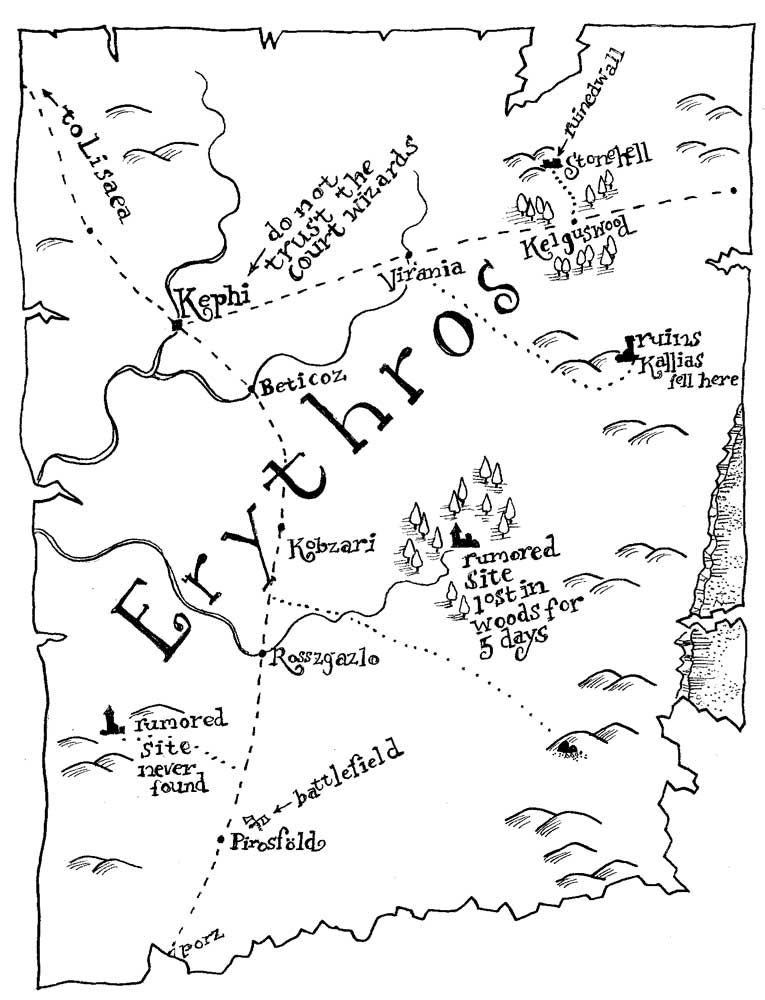
A Campaign Map for Stonehell Dungeon

I'm not sure if there's anyone out there looking for a small campaign map for Stonehell Dungeon, but since I finished one up for my online MapTool campaign, I thought I'd share. If anyone wants a more print-friendly copy, I can upload a pdf for you. This is a small portion of my campaign world of Averlorn and the idea is that "your crazy uncle gave you this map just before he died". It has a few other potential adventuring sites that you can develop and the town of Kephi might offer some fun intrigue. The portion of the map to the East is a rather steep escarpment where the land falls away to a trackless desert.